

Psalm 91 · Meaning, context & original Hebrew
What does Psalm 91 mean?
 Watch this verse in the Bible Frame app
1He who dwells in the secret place of the Most High will rest in the shadow of the Almighty.2I will say of the LORD, “He is my refuge and my fortress; my God, in whom I trust.”3For he will deliver you from the snare of the fowler, and from the deadly pestilence.4He will cover you with his feathers. Under his wings you will take refuge. His faithfulness is your shield and rampart.5You shall not be afraid of the terror by night, nor of the arrow that flies by day,6nor of the pestilence that walks in darkness, nor of the destruction that wastes at noonday.7A thousand may fall at your side, and ten thousand at your right hand; but it will not come near you.8You will only look with your eyes, and see the recompense of the wicked.9Because you have made the LORD your refuge, and the Most High your dwelling place,10no evil shall happen to you, neither shall any plague come near your dwelling.11For he will put his angels in charge of you, to guard you in all your ways.12They will bear you up in their hands, so that you won’t dash your foot against a stone.13You will tread on the lion and cobra. You will trample the young lion and the serpent underfoot.14“Because he has set his love on me, therefore I will deliver him. I will set him on high, because he has known my name.15He will call on me, and I will answer him. I will be with him in trouble. I will deliver him, and honor him.16I will satisfy him with long life, and show him my salvation.”
Psalm 91 · World English Bible, Catholic Edition (public domain)
The short answer
Psalm 91 tells the person who shelters in God not to fear night terrors, plague or arrows, because God covers them like a bird, sends angels to guard them and promises rescue. It is a prayer of trust rather than a charm against all harm, and the devil’s misuse of it against Jesus shows why.
- Who is safeWhoever shelters in God
- The picturesWings, shield, angels
- Final voiceGod answers, vv. 14–16
- The warningThe devil quotes it
Explain it at my level
Kids
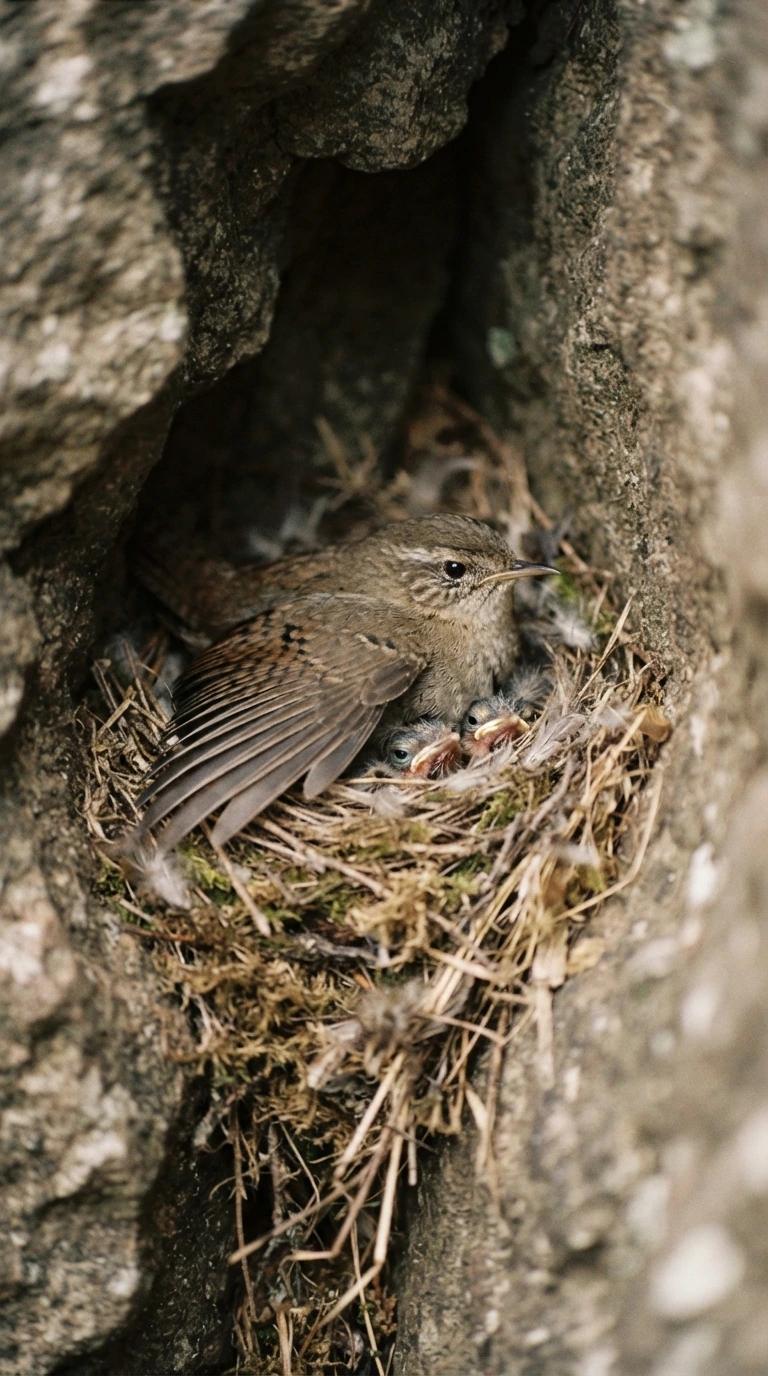
When danger comes, a mother bird pulls her chicks under her wings. This psalm says God is like that for people who run to him. It also says God sends angels to look after us. Bad things can still happen, and they even happened to Jesus. But God says, I will be with you in trouble.
Key takeawayWhen you are scared, you can run to God like a chick to its mother.
Simple
The psalm starts with a person who has made God their home and safe place. A voice then promises that person protection from traps, sickness, war and fear, by day and by night. God will send angels too. At the end God speaks and promises to answer, to stay close in trouble and to rescue. The psalm is about trusting God, and it does not say that life will have no pain.
Key takeawayThe safest place is close to God, and that closeness holds even in trouble.
Standard
The opening lines name the shelter: the Most High, the Almighty, my refuge. Verses 3–8 then address a “you” and list the dangers, from the fowler’s trap to pestilence and arrows, with God’s wings and faithfulness as the defense. Verses 9–13 repeat the logic and add angels. Then, in verses 14–16, the voice changes and God speaks in the first person. The climax is not an absence of danger, since God says “I will be with him in trouble.” The devil later quotes verses 11–12 to Jesus on the temple pinnacle, and Jesus refuses to test God on the strength of them.
Key takeawayThe psalm’s last word is God’s own promise of presence, not a list of dangers avoided.
Scholar
The psalm has no heading in Hebrew, and its shifting persons (he in v. 1, I in v. 2, you from v. 3, God as I in vv. 14–16) lead some commentators to hear several voices, perhaps a worshiper, a teacher and God, and others to suspect worship use; the US bishops’ note calls vv. 14–16 an oracle of salvation. The setting is debated. Augustine’s Latin reads he shall say in verse 2 where the Hebrew reads I will say. Verse 9 is similarly awkward, reading literally for you, LORD, my refuge. The Talmud calls the psalm the song of evil spirits or of plagues, and a Dead Sea scroll, 11Q11, copies it with songs against demons, although one recent conference paper argues that the Talmud’s older name first meant a different exorcism poem. Matthew 4:6 and Luke 4:10–11 quote verses 11–12 in the devil’s mouth, each without the phrase in all your ways, and Jesus replies from Deuteronomy 6:16.
Key takeawayScripture itself shows that this psalm can be quoted correctly and still be used wrongly.
Key words
In the original Hebrew word order, read right to left. Choose a word to see what it means and why it matters.
secret place of the Most High
בְּסֵ֣תֶר עֶלְי֑וֹן beseter elyon
shelter of the Highest
Seter means a covering, shelter or hiding place. Elyon is a title for God as the highest. Together they say that the first thing this psalm offers is a place to be, and the owner of that place is God.
Why it mattersThe promises that follow belong to someone already living with God, not to anyone who merely says the words.
Noun, masculine singular construct; Adjective, masculine singular absolute · Strong’s H5643 + H5945
rest in the shadow of the Almighty
בְּצֵ֥ל שַׁ֝דַּ֗י יִתְלוֹנָֽן betzel shadai yitlonan
lodge in Shaddai’s shadow
The verb comes from a root meaning to lodge or to pass the night, so it pictures staying over under someone’s protection. Tzel is shade or shadow, and Shaddai is a name of God the lexicon gives as Almighty. The verb suits a psalm prayed at night.
Why it mattersA shadow only covers you when you stay close to what casts it. The image depends on nearness.
Noun, masculine singular construct; Proper noun; Hithpael imperfect, 3rd person masculine singular · Strong’s H6738 + H7706 + H3885
snare of the fowler
מִפַּ֥ח יָק֗וּשׁ mipach yakush
bird-catcher’s trap
Pach is a bird trap, and the word is also used in a figurative way for plots and calamities. Yakush is the one who sets it. So the first danger in the list is hidden and set by someone else, and it is one that a bird cannot see coming.
Why it mattersNot every danger here is a disaster. Some threats are quiet traps that a person walks into unaware.
Noun, masculine singular construct; Noun, masculine singular absolute · Strong’s H6341 + H3353
He will cover you with his feathers
בְּאֶבְרָת֨וֹ יָ֣סֶךְ לָ֭ךְ be’evrato yasekh lakh
he screens with pinions
Evrah means a pinion or wing, used of birds and, in a figure, of God. The verb means to screen or cover. Deuteronomy 32:11 pictures God as an eagle over its young, and Ruth 2:12 speaks of refuge under God’s wings.
Why it mattersThe picture is tender as well as strong. The psalm describes God’s care, and it does not ask us to imagine God as a bird.
Noun, feminine singular construct, with 3rd person singular suffix; Hiphil jussive, 3rd person masculine singular; Preposition, with 2nd person singular suffix · Strong’s H84 + H5526 + H9032
His faithfulness is your shield and rampart
צִנָּ֖ה וְֽסֹחֵרָ֣ה אֲמִתּֽוֹ tzinah vesocherah 'amito
his faithfulness, your defense
Tzinnah is a large shield and socherah a buckler, and the Hebrew ends on 'amito, his faithfulness. It is the word for what is firm and true. So the armor in this verse is not an object but God’s reliability.
Why it mattersProtection rests on God’s character. Nothing here is a thing a person can own, wear or carry.
Noun, feminine singular absolute; Noun, feminine singular absolute; Noun, feminine singular construct, with 3rd person singular suffix · Strong’s H6793 + H5507 + H571
terror by night
מִפַּ֣חַד לָ֑יְלָה mipachad layelah
dread of the night
Pachad means terror or dread, and laylah is night. The verse pairs it with the arrow by day, and verse 6 continues with darkness and noon. Together the pairs cover all hours, and the text does not say what the terror is.
Why it mattersThe psalm treats fear itself as something to be faced, not only the things that cause fear.
Noun, masculine singular construct; Noun, masculine singular absolute · Strong’s H6343 + H3915
A thousand may fall at your side
יִפֹּ֤ל מִצִּדְּךָ֨ אֶ֗לֶף yipol mitzidekha 'elef
a thousand fall beside
'Elef is a thousand, and the verb is the ordinary one for falling. The verse goes on to ten thousand and to a promise that it will not come near you. This is the language of poetry, painting a picture of a battlefield or plague with heavy losses all around.
Why it mattersThe verse admits mass suffering around the faithful. It is poetic confidence, not a ranking of who had faith and who did not.
Qal imperfect, 3rd person masculine singular; Noun, masculine singular construct, with 2nd person singular suffix; Noun, common singular absolute · Strong’s H5307 + H6654 + H505
the LORD your refuge
אַתָּ֣ה יְהוָ֣ה מַחְסִ֑י 'atah YHWH machsi
LORD, my refuge
Here the Hebrew reads literally for you, LORD, my refuge, with my where the sense of the line expects your. The word for refuge means shelter from storm or danger, the same word as verse 2. Some commentators hear a change of speaker here, others adjust the wording, and the line remains debated.
Why it mattersThe verse is a small sign that this psalm may be a conversation, with one voice answering another.
Personal pronoun, 2nd person masculine singular; Proper noun; Noun, masculine singular construct, with 1st person singular suffix · Strong’s H859 + H3068 + H4268
his angels in charge of you
מַ֭לְאָכָיו יְצַוֶּה־לָּ֑ךְ mal’akhav yetzaveh lakh
he commands his angels
Mal’akh can mean messenger or angel, and the Piel form of the verb means to command or give charge. The Hebrew places his angels first. The angels act under God’s orders, so the protection in the verse is God’s own care working through them.
Why it mattersAngels here do not act on human command. Nothing in the verse lets a person summon them on demand.
Noun, masculine plural construct, with 3rd person singular suffix; Piel imperfect, 3rd person masculine singular; Preposition, with 2nd person singular suffix · Strong’s H4397 + H6680 + H9032
to guard you in all your ways
לִ֝שְׁמָרְךָ֗ בְּכָל־דְּרָכֶֽיךָ lishmarekha bekhol derakheikha
keep on your roads
Shamar means to keep, guard or watch over, and derekh is a road or way, often a way of life. Matthew’s and Luke’s quotations of this verse in the devil’s mouth both lack the phrase in all your ways. What that omission means, if anything, is a matter of interpretation.
Why it mattersThe guarding is promised along a person’s road. Throwing yourself off a temple is not a road God has laid out.
Qal infinitive construct, common, with 2nd person singular suffix; Noun, masculine singular construct; Noun, masculine plural construct, with 2nd person singular suffix · Strong’s H8104 + H3605 + H1870
bear you up in their hands
עַל־כַּפַּ֥יִם יִשָּׂא֑וּנְךָ 'al kapayim yisa’unekha
lifted on their palms
Word for word the Hebrew says on palms they will lift you. The verb nasa means to lift or carry. It is the line the devil presses on Jesus, urging him to jump. Its picture of a traveler carried past a stone becomes in his mouth a dare.
Why it mattersThe same words can be a comfort to a traveler or a temptation to a show. The use decides which.
Preposition; Noun, feminine dual absolute; Qal imperfect, 3rd person masculine plural, with 2nd person singular suffix · Strong’s H5921 + H3709 + H5375
tread on the lion and cobra
עַל־שַׁ֣חַל וָפֶ֣תֶן תִּדְרֹ֑ךְ 'al shachal vafeten tidrokh
you will trample beasts
Shachal is a lion, and peten a venomous snake, perhaps a cobra. The verse then adds a young lion and tannin, which can mean serpent or sea monster. Augustine read these beasts as the devil’s open and hidden attacks. Neither Gospel’s quotation of the psalm continues to this verse.
Why it mattersThe one who shelters in God is finally the one on top. Danger does not get the last word.
Preposition; Noun, masculine singular absolute; Noun, masculine singular absolute; Qal imperfect, 2nd person masculine singular · Strong’s H5921 + H7826 + H6620 + H1869
he has set his love on me
בִ֣י חָ֭שַׁק vi chashak
he clings to me
Now God is speaking. The verb chashak means to love, be attached to or long for, so it has the warmth of desire, not mere duty. The psalm’s promises are here tied to that attachment, and verses 14–16 give the reason in God’s own voice.
Why it mattersGod’s answer is given to someone who loves God, not to someone reciting a formula for safety.
Preposition, with 1st person singular suffix; Qal perfect, 3rd person masculine singular · Strong’s H9030 + H2836
be with him in trouble
עִמּֽוֹ־אָנֹכִ֥י בְצָרָ֑ה 'imov 'anokhi vetzarah
with him in distress
The Hebrew has no verb: with him I, in distress. The pronoun for I is spelled out, and tzarah means straits or distress. So God’s promise stands inside the trouble, and the rescue is named separately, in the words that come right after.
Why it mattersThis is the psalm’s own correction of any no-harm reading. God promises company in trouble, which assumes that trouble comes.
Preposition, with 3rd person singular suffix; Personal pronoun, 1st person common singular; Noun, feminine singular absolute · Strong’s H5973 + H595 + H6869
long life
אֹ֣רֶךְ יָ֭מִים 'orekh yamim
length of days
Orekh yamim is literally length of days, a common biblical blessing. Augustine read it as eternal life, since days that never end are not like longer summer days. The Hebrew phrase itself speaks of a full life, and Christians have added the further hope.
Why it mattersRead only as a promise about years, it fails many saints. Read in the whole of Scripture, it opens further.
Noun, masculine singular construct; Noun, masculine plural absolute · Strong’s H753 + H3117
my salvation
וְ֝אַרְאֵ֗הוּ בִּֽישׁוּעָתִֽי ve’ar’ehu bishu’ati
my deliverance
Yeshu’ah means salvation, deliverance or victory, and the verb before it means to let someone look on. So the psalm closes with God showing what his own rescue is. The last word of the Hebrew is salvation with my attached, and it belongs to God.
Why it mattersThe psalm ends with something to see and receive from God, and not with anything the person has achieved.
Hiphil imperfect with waw, 1st person common singular, with 3rd person singular suffix; Noun, feminine singular construct, with 1st person singular suffix · Strong’s H7200 + H3444
Where the verse sits
Psalm 91 comes right after Psalm 90, which begins “Lord, you have been our dwelling place for all generations.” Verses 1 and 9 here pick up the same idea of dwelling. It has no heading in Hebrew and no story attached, so its dangers are left open for anyone to pray.
- vv. 1–2
A person who dwells with the Most High names God as refuge, fortress and the one trusted.
- vv. 3–8
A voice assures you of rescue from traps, plague, arrows and fear, with God’s wings as the cover.
- vv. 9–13
Because the LORD is the refuge, angels guard your ways and you trample lion and serpent.
- vv. 14–16
God speaks in the first person: to the one who loves him he promises answer, presence, rescue and salvation.
Why some Bibles call it Psalm 90
Hebrew and Greek-Latin Bibles number most of the psalms differently. So this is Psalm 90 in the Greek and Latin tradition, and older Catholic books and writers such as Augustine use that number. The psalm that those books call 91 is the one that opens “It is a good thing to give thanks to the LORD” here. This page uses the Hebrew numbering.
When the devil quotes the Psalm
Matthew and Luke both say the devil set Jesus on the pinnacle of the temple and quoted verses 11–12, urging him to throw himself down. Jesus answers from Deuteronomy 6:16 not to test God. The Catechism says Satan tried by this gesture to “force God to act.” Augustine adds that “the temptation of Christ is our learning.”
Who is speaking?
The grammar moves from he, to I, to you, and finally to God’s own I. Some commentators hear different voices, perhaps a worshiper, a teacher and an oracle from God, and some suspect use in worship, though no setting is stated and this is debated. Whatever its origin, the movement gives God the final word.
Read Psalm 91, the whole chapter, word for word.
Common misreadings
A common reading
Psalm 91 guarantees nothing bad will happen to believers.
Closer to the text
God’s own speech says “I will be with him in trouble,” so trouble is assumed. Verse 10 is confident poetry, and Romans 8:36 says believers are killed all day long. Jesus, who trusted the Father completely, was crucified.
A common reading
Reciting or carrying Psalm 91 protects you like a charm.
Closer to the text
Many people pray it or carry it in danger, and asking God for protection is right. But the promises rest on dwelling with God and loving him, not on the words as an object. The Catechism says “Wearing charms is also reprehensible.”
A common reading
The angels will catch me, so I can take any risk.
Closer to the text
That is close to the devil’s own argument on the temple pinnacle. Jesus refused it. The Catechism calls this tempting God, since it puts God’s power to the test and “harbors doubt about his love, his providence, and his power.”
A common reading
If people died of plague, they lacked faith.
Closer to the text
The verse about thousands falling is poetry about trust, not a verdict on the dead. Job suffered without being guilty, and Augustine, on the words about harm not coming near, points to the martyrs: their torture reached the body but not their faith.
How traditions read it
Jews and Christians share this psalm as a prayer for protection in danger; they differ in the settings where they pray it and in whether they read it through the temptation of Jesus.
Jewish
Prayed as a psalm of protection, including at the bedtime Shema, and in some communities on the way to a burial. The Talmud calls it the song of evil spirits, or of plagues. It is read of the faithful person and God, without a reference to Jesus.
Catholic
Prayed at Night Prayer on Sunday, after Evening Prayer II, and sung on the First Sunday of Lent in Year C, with Luke’s account of the temptation. The Catechism draws on that scene when teaching about testing God (2119) and teaches the care of angels (336).
Read it with these verses
- Matthew 4:5–7The devil quotes verses 11–12 at the temple, and Jesus answers from Deuteronomy against testing God.
- Luke 4:9–12Luke tells the same temptation and quotes more of the wording about being guarded and carried.
- Deuteronomy 32:11God is pictured as an eagle spreading its wings over its young, the same image as verse 4.
- Luke 10:19Jesus gives his disciples authority to tread on serpents, recalling the picture of trampling in verse 13.
- Romans 8:35–39Paul lists danger and sword, then says nothing can separate believers from God’s love, which balances any no-harm reading.
- Hebrews 1:14Angels are described as serving spirits sent to serve those who will inherit salvation, like the psalm’s guards.
Live it this week
- When you pray for safety, do you treat God as a shelter to live in, or as a service to call in emergencies?
- What danger or fear is keeping you up at night? Could you name it to God before you sleep this week?
- How would your prayer change if you took God’s words as your own hope: I will be with him in trouble?
A short prayer
Lord, you are my refuge. Keep me close under your care tonight. Guard me on the road you have given me, and keep me from testing you. When trouble comes, stay with me and let me see your salvation. Amen.
To pray with this verse more slowly, try lectio divina, the Church’s ancient way of praying with Scripture.
Memorize it
Start with Psalm 91:1–2. Say the verse aloud, then hide more words. Tap a blank to peek.
Teaching Psalm 91
For parents, small-group leaders and preachers.
With kids
Ask: Where do baby birds go when they are scared? Show it with your arms, like wings, around a child. Then read verse 4 together, and say that God covers us like that, and stays with us even when hard things still happen.
Small group questions
- Where does the voice change in this psalm, and who has the last word?
- Why does Jesus refuse the devil, even though the devil quotes these verses accurately?
- How do verse 10 and verse 15 fit together? Does one explain the other?
Sermon outline
- The Shelter named (vv. 1–2)
- The dangers faced (vv. 3–8)
- The guard given (vv. 9–13)
- The promise spoken (vv. 14–16)
Questions people ask
Who wrote Psalm 91?
No one knows for certain. The Hebrew gives it no heading. Psalm 90, just before it, is headed as a prayer by Moses, and Jewish tradition has linked this psalm to Moses too, while the Greek version adds a heading with David’s name. Its author and date remain uncertain, and it may have been shaped for worship.
Is Psalm 91 a promise that no harm will come to me?
No, it is not a guarantee of a life without harm. The psalm speaks in the bold language of poetry about God’s protection, and God’s own words assume suffering: “I will be with him in trouble.” Jesus trusted God perfectly and still went to the cross. Christians pray it asking for protection and trusting God whatever happens.
Why did Satan quote Psalm 91 to Jesus?
He used verses 11–12 to dare Jesus to throw himself from the temple and make God rescue him. In Matthew 4:6 he says “for it is written,” using Scripture as bait. Jesus answers with Deuteronomy 6:16, against testing God. So the scene warns that accurate quotation is not the same as faithful reading of God’s word.
Can I use Psalm 91 for protection?
Yes, as a prayer, and many believers do, especially at night, in sickness or in war. The Church itself prays it before sleep. What the psalm does not support is treating the words or a printed copy as an object with power of its own. Its protection is tied to trust in God, love of God and calling on him.
What does Psalm 91 say about angels?
Verses 11–12 say God commands his angels to guard the person on all their ways and to carry them past harm. The Catechism teaches that “From infancy to death human life is surrounded by their watchful care and intercession.” The verses show angels acting under God’s orders, so they are not a force a person can call down at will.
Why is Psalm 91 called Psalm 90 in some Catholic books?
Those books follow the Greek and Latin numbering, which runs one behind the Hebrew for most of the Psalter. Psalm 90 there is this psalm, and Augustine’s exposition uses that number. Many modern Catholic Bibles use the Hebrew 91, often with the other number noted. The psalm’s words are the same prayer under either number.
When does the Catholic Church pray Psalm 91?
It is the psalm of Night Prayer on Sunday after Evening Prayer II, and others may choose it on any night. It is also the Responsorial Psalm on the First Sunday of Lent in Year C, with the refrain in the US lectionary “Be with me, Lord, when I am in trouble.” That Sunday’s Gospel is Luke’s temptation account, where the psalm is quoted.
How can I explain Psalm 91 to a child?
Start with a bird and her chicks. Tell the child that when we are afraid we can go to God as chicks go under their mother’s wings. Be honest that sad and hard things can still happen, and that God promises to stay with us in them. Choose the Kids level above to read a version aloud.
In culture
Psalm 91 has become known as the Soldier’s Psalm. The Museum of the Bible recounts that the actor Jimmy Stewart’s father gave him a letter enclosing a copy when he enlisted during World War II, and says American troops in Iraq have been known to read it before patrols. The Catholic hymn “On Eagle’s Wings,” which Michael Joncas, later a priest, wrote for a friend whose father had died, first sung at the wake in 1976, was inspired by this psalm, which he knew from night prayer. The psalm itself speaks of wings and feathers, though not of eagles.
Keep reading
Sources
Every verse is quoted word for word, and every Catechism paragraph below was checked on the Vatican’s published text.
Scripture
- Psalm 91:1–16
- Psalm 90:1
- Psalm 92:1
- Matthew 4:6
- Luke 4:10–11
- Deuteronomy 6:16
- Ruth 2:12
- Romans 8:36
- Psalm 90:0
- Matthew 4:5–7
- Luke 4:9–12
- Deuteronomy 32:11
- Luke 10:19
- Romans 8:35–39
- Hebrews 1:14
Other sources
- Catechism of the Catholic Church, 336
- Catechism of the Catholic Church, 2117
- Catechism of the Catholic Church, 2119
- Augustine, Exposition on Psalm 91 (Psalm 90 in his numbering), New Advent
- Babylonian Talmud, Shevuot 15b
- AJ Berkovitz, “Shir Shel Pegaim: A Historical Hypothesis,” abstract, Rutgers Rabbinics Conference, 2025
- General Instruction of the Liturgy of the Hours, 88
- USCCB, daily readings for the First Sunday of Lent, Year C (March 9, 2025), Lectionary 24
- USCCB, notes on Psalm 91
- Logos, “Demons, DSS, and Jesus: Psalm 91 and the Need for Text Critical Pastors”
- Elchanan Samet, “Psalm 91 (Part 2): The Song to Counter Evil,” Torat Har Etzion
- Calvin Institute of Christian Worship, “The Wings of God: Psalm 91”
- Peninei Halakha, Prayer 26:1, on the bedtime Shema
- Chabad.org, “The Seven Rests,” on the burial procession
- Museum of the Bible, “Psalm 91: The Soldier’s Psalm”
- University of St. Thomas, on Father Michael Joncas and “On Eagle’s Wings”
- STEPBible.org, tagged Hebrew text and lexicon (CC BY 4.0), for the original words, Strong’s numbers and grammatical forms
Scripture is quoted word for word from the World English Bible, Catholic Edition. Images are artistic interpretations.