

Psalm 23:4 · Meaning, context & original Hebrew
What does Psalm 23:4 mean?
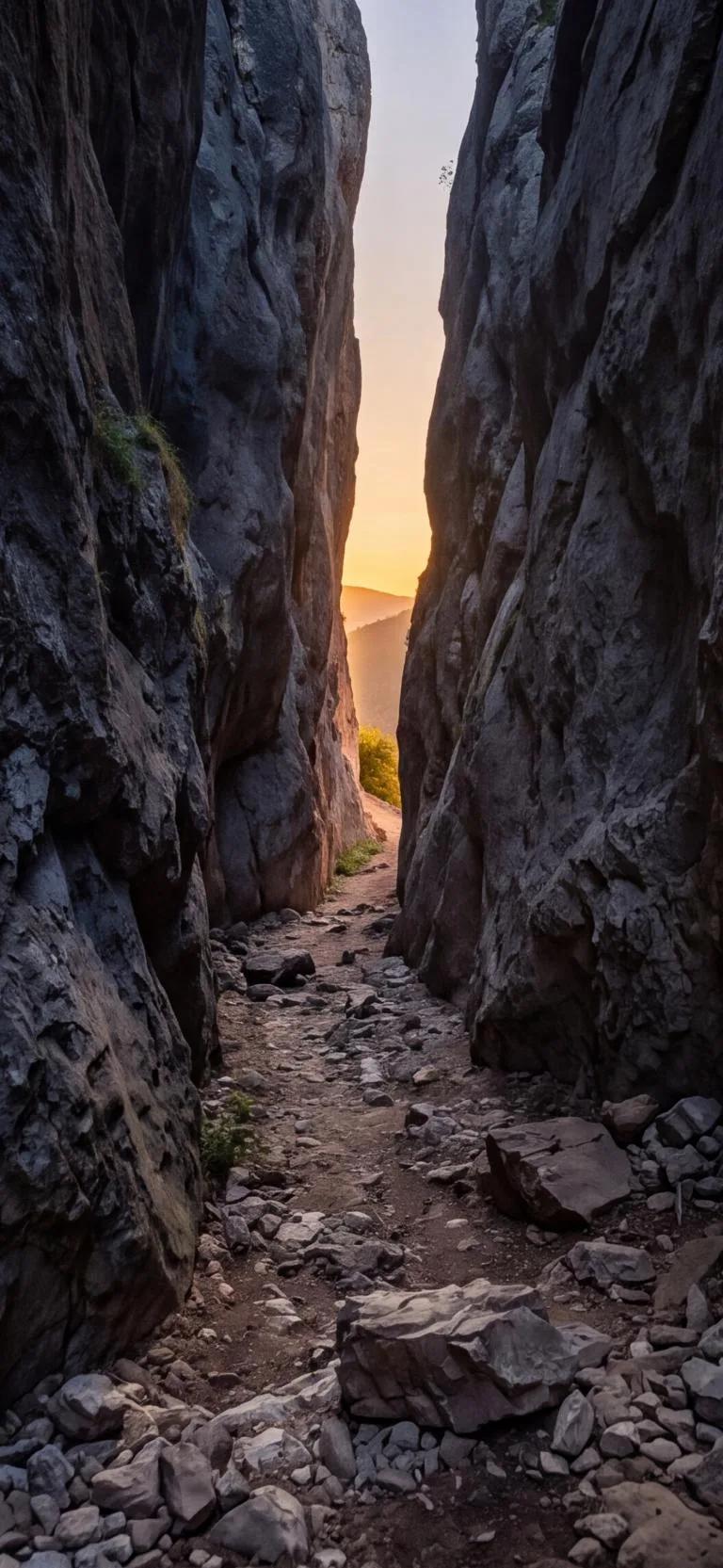 Watch this verse in the Bible Frame app
Even though I walk through the valley of the shadow of death, I will fear no evil, for you are with me. Your rod and your staff, they comfort me.
Psalm 23:4 · World English Bible, Catholic Edition (public domain)
The short answer
Psalm 23:4 says that the one who prays will walk through the darkest valley without fearing harm, because the LORD walks there too, and his shepherd’s rod and staff give comfort. It is the turning point of Psalm 23, where the prayer stops speaking about God and speaks to him directly.
- Who walksThe one praying
- WhereThe darkest valley
- Why no fearYou are with me
- What comfortsRod and staff
Explain it at my level
Kids
Imagine walking through a deep, dark valley at night, where you cannot see very far. That would feel scary. Now imagine a strong shepherd walking right beside you, with a stick to chase away wild animals and a staff to lean on. You would feel brave. This verse says God is like that shepherd. When things are dark and scary, he walks with us.
Key takeawayIn the dark, God is right beside you.
Simple
This verse pictures a sheep walking through a deep, dark valley, the kind of place where danger hides. The person praying says, I will not be afraid. The reason is not that the valley is safe. It is that God is there. A shepherd carried a rod to fight off attackers and a staff to guide the flock. Seeing them, the sheep feels calm. The verse can be prayed in any dark time, including grief and the fear of death.
Key takeawayCourage here comes from who is with you, not from where you are.
Standard
Verses 1–3 speak about the LORD as he: he makes me lie down, he leads, he restores. Verse 3 speaks of paths of righteousness, and verse 4 shows that a right path can still run through a dark gorge. Here the psalm turns to you. The sheep does not say the valley will be avoided, only that it will be walked through. The Hebrew word for evil here points to harm or calamity, so the fear set aside is fear of what might happen. The reason is short: “you are with me.” Verse 5 then moves from the shepherd to a host’s table, set before enemies.
Key takeawayA right path can pass through darkness, and the shepherd’s presence makes it walkable.
Scholar
The verse opens with gam ki, which STEPBible’s lexicon allows as even though or even if, so the imperfect I walk may be supposed, habitual or future. Gei is a valley or narrow gorge. Tzalmavet is pointed as death-shadow, and the lexicon also gives deep darkness. Its origin is debated: it may join shadow and death, or come from a root meaning to be dark. Job 38:17 sets it beside the gates of death, and Jeremiah 2:6 uses it for the wilderness Israel crossed. The negative clause sets two similar sounding words side by side. Then the address turns from he in verses 1–3 to you, kept through verse 5. Counted in STEPBible’s text after the heading, 26 Hebrew words come before for you are with me and 26 after it. Finally hemah resumes rod and staff before the verb, a Piel of nacham.
Key takeawayBy that count, at the psalm’s center stands one reason for courage: you are with me.
Key words
In the original Hebrew word order, read right to left. Choose a word to see what it means and why it matters.
Even though
גַּ֤ם כִּֽי־ gam ki
even if, even when
Gam ki joins gam, also or even, with ki, which can mean when, if or though. STEPBible’s lexicon lists even and yea though for gam when a case is only supposed, and a concessive sense for ki. The verse does not say the valley is certain. It says what will hold if it comes.
Why it mattersThe verse neither promises a life without valleys nor predicts one. It prepares the one praying for the possibility.
Adverb; Conjunction · Strong’s H1571 + H3588
I walk
אֵלֵ֨ךְ 'elekh
I will go
Elekh is a form of halakh, to go or walk, in the imperfect, which can describe what happens now, what will happen or what happens again and again. The lexicon also lists a figurative sense of halakh for a person’s way of life. Walking means moving through, one step at a time.
Why it mattersThe sheep keeps moving. The valley is a stretch of road to get through, and nothing in the verse suggests staying there.
Qal imperfect, 1st person common singular · Strong’s H1980
through the valley
בְּגֵ֪יא begei’
in a valley of
Gei means a valley, and STEPBible’s lexicon adds a steep valley or narrow gorge. The preposition be can mean in or through, and here the walker is inside the valley itself. A narrow gorge is a place where light is short and the way ahead is hard to see, which suits the darkness named next.
Why it mattersThe picture is a shepherd’s real route, narrow and shadowed, before it is a symbol of trouble.
Noun, common singular construct · Strong’s H1516
the shadow of death
צַלְמָ֡וֶת tzalmavet
deep darkness
Tzalmavet is pointed as a compound of shadow and death, and STEPBible’s lexicon gives death-shadow and deep darkness, with figurative uses for extreme danger and for the place of the dead. Its origin is debated. Job 38:17 pairs it with the gates of death, while Isaiah 9:2 uses it for a land on which light has shined.
Why it mattersThe phrase reaches as far as death, and it also covers any darkness deep enough to frighten. Both readings are faithful to the Hebrew.
Noun, masculine singular absolute · Strong’s H6757
I will fear no
לֹא־אִ֘ירָ֤א lo’ 'ira’
I will not fear
Lo ira joins the negative lo with a form of yare, to fear or be afraid, a verb that can also mean to stand in awe. The form is imperfect, first person, so it can be a resolve or a confident expectation. Said inside the valley, it reads as a decision as much as a report of feelings.
Why it mattersFaith here is not the absence of danger or of feeling. It is a choice made in the dark, with a reason attached.
Negative particle; Qal imperfect, 1st person common singular · Strong’s H3808 + H3372
evil
רָ֗ע ra’
harm
Ra can mean moral evil, and STEPBible’s lexicon also lists distress, misery, injury and calamity. In a dark gorge the danger is attack, a fall or getting lost, so harm fits the scene. In Hebrew the words ira ra, fear and harm, sound alike, which makes the line easy to remember.
Why it mattersMany readers hear the devil or wickedness here. The line is about danger of any kind, and the shepherd’s presence answers it.
Adjective, masculine singular absolute · Strong’s H7451
for you
כִּי־אַתָּ֥ה ki 'atah
because you
Ki here gives the reason, and attah is you, masculine singular. Until now the psalm has said he: he makes me lie down, he leads, he restores. Now it speaks to the shepherd directly. Benedict XVI calls these words a proclamation of steadfast faith, and the turn comes in the darkest place of the psalm.
Why it mattersThe prayer becomes personal where it is hardest. God is addressed, not only described, at the moment of greatest danger.
Conjunction; Personal pronoun, 2nd person masculine singular · Strong’s H3588 + H859
are with me
עִמָּדִ֑י 'imadi
with me
Imadi is a fuller form of im, with, joined to the suffix me, and Hebrew needs no verb for are. The same pairing of fear and presence comes when God speaks: “Don’t be afraid, for I am with you” (Genesis 26:24; compare Isaiah 41:10). Here the one praying says that truth back to God.
Why it mattersThe reason for courage is a presence, stated in three Hebrew words, and it does not depend on the valley getting lighter.
Preposition, with 1st person singular suffix · Strong’s H5978
Your rod
שִׁבְטְךָ֥ shivtekha
your club
Shevet covers rod, staff, club and sceptre, and STEPBible’s lexicon names a shepherd’s club among its senses. A shepherd had to defend the flock, as David describes rescuing lambs from a lion and a bear (1 Samuel 17:34–35). Micah 7:14 uses this same Hebrew word, with the same ending for your, when it asks God to shepherd his people.
Why it mattersThe rod comforts because it protects. In this verse it is a weapon used for the sheep, not against them.
Noun, masculine singular construct, with 2nd person singular suffix · Strong’s H7626
and your staff
וּ֝מִשְׁעַנְתֶּ֗ךָ umish’antekha
and your staff
Mishenet is a staff, the word Zechariah 8:4 uses for the staffs the old will carry in Jerusalem’s streets. STEPBible lists closely related words meaning support, and a verb from the same root letters means to lean. So this is the shepherd’s walking stick, something to lean on and steer the flock with.
Why it mattersRod and staff together picture protection and support, the two things a frightened walker in the dark most needs.
Noun, feminine singular construct, with 2nd person singular suffix · Strong’s H4938
they comfort me
הֵ֣מָּה יְנַֽחֲמֻֽנִי hemah yenachamuni
they comfort me
Hemah, they, picks up rod and staff again before the verb, a little like saying those two, they comfort me. The verb is nacham in the Piel, to comfort or console, the same stem as the double command to comfort in Isaiah 40:1. The imperfect leaves the comfort open to the present and to what is coming.
Why it mattersComfort comes through the shepherd’s tools, things the sheep can see and hear. God’s care in the dark has visible signs.
Personal pronoun, 3rd person masculine plural; Piel imperfect, 3rd person masculine plural, with 1st person singular suffix · Strong’s H1992 + H5162
Where the verse sits
Psalm 23 is a short prayer of trust in the LORD, first as shepherd and then as host. Verse 4 stands in the middle. After three verses of green pastures, still waters and right paths, the road goes down into a dark valley, and the prayer turns from he to you.
- heading
The heading calls it a psalm by David, and Jewish and Christian tradition has long prayed it as his.
- vv. 1–3
The LORD is a shepherd who gives his sheep pasture, water, rest and right paths, for his name’s sake.
- v. 4
You are here. The path runs through the valley of the shadow of death, and the prayer turns to address the shepherd: you are with me.
- v. 5
The picture changes to a host who sets a table before enemies, anoints the guest’s head and fills the cup.
- v. 6
Goodness and loving kindness follow the speaker every day, and the journey ends in the LORD’s house.
Why some Bibles say Psalm 22:4
Hebrew and Greek-Latin Bibles number most of the psalms differently, so older Catholic Bibles and some liturgical books call this verse Psalm 22:4. Within the psalm the count is the same: the Hebrew heading shares verse 1, so the line about the valley is verse 4 in every numbering. This page uses the Hebrew psalm number, as most modern Bibles do.
A flock in a dark gorge
Shepherds moved their flocks between pastures, and the way could lead through narrow valleys. Benedict XVI describes a flock moving after sunset: the sheep grow restless, they may stumble or stray, and attackers may lurk in the dark. A shepherd’s rod could defend and his staff could guide. The verse depends on that picture, since the sheep’s calm comes from the shepherd beside it.
Where the psalm turns
Verses 1–3 speak of the LORD in the third person, he. Verse 4 speaks to him as you, and the psalm keeps that address through verse 5. Counting the Hebrew words after the heading in STEPBible’s text, 26 come before for you are with me and 26 after it. Whether the poet planned this is not known, but the words stand at the center.
Read Psalm 23, the whole chapter, word for word.
Common misreadings
A common reading
This verse is only about the moment of death.
Closer to the text
The Hebrew word can mean death-shadow or deep darkness, and the lexicon lists extreme danger among its uses. Augustine applied it to this present life, and Benedict XVI to suffering, doubt and every human problem. It fits a deathbed, and it fits other dark places too.
A common reading
Fearing no evil means a believer never feels afraid.
Closer to the text
The verse is spoken inside the valley, where fear would be natural. It does not deny the darkness or the danger. It gives a reason not to be ruled by fear, that God is present, which is a statement about God more than about feelings.
A common reading
Evil here means the devil or wicked people.
Closer to the text
The Hebrew word ra can mean moral evil, but STEPBible’s lexicon also lists distress, injury and calamity. In a shepherd’s valley the threat is harm of any kind. Enemies appear in verse 5, yet this line speaks of danger in general.
A common reading
God promises to keep his people out of dark valleys.
Closer to the text
The verse begins with even though, and the walker is already in the valley. What it promises is company through the darkness, not a way around it. Verses 5 and 6 then speak of a table and a home beyond it.
How traditions read it
Jews and Christians both pray this verse as trust in God’s presence in danger and at death; they differ in how they read the valley, the rod and the staff.
Jewish
Rashi reads the valley as darkness and links it to David’s flight in the wilderness of Ziph. He takes the rod as David’s sufferings, the staff as his trust in God’s loving kindness, and says both comfort him. Psalm 23 is the psalm most often recited at Jewish funerals.
Catholic
Augustine read the shadow of death as this present life, and the rod and staff as God’s discipline, which comforts because God is mindful of us. Psalm 23 is offered at funeral Masses, and the Catechism teaches that because of Christ, Christian death has a positive meaning (1010).
Read it with these verses
- Psalm 23:5The next verse moves from the valley to a table set before enemies, with oil and an overflowing cup.
- Isaiah 41:10God himself joins the two halves of this verse: do not be afraid, because I am with you.
- Isaiah 43:2God promises to be with his people as they pass through waters and fire, not to spare them the crossing.
- Micah 7:14A prayer asks God to shepherd his people with his rod, the same Hebrew word as here.
- John 10:11Jesus calls himself the good shepherd, who lays down his life for the sheep.
- Matthew 28:20The risen Jesus promises to be with his disciples always, to the end of the age.
Live it this week
- Which valley are you walking through now, and is it hard to believe that God is with you in it?
- This verse speaks to God directly in the dark. What would it mean to say you are with me aloud in prayer this week?
- When the next dark stretch comes, what will remind you of the shepherd’s rod and staff beside you?
A short prayer
Lord, my shepherd, the way ahead is dark, and I cannot see far. Walk with me through this valley. Guard me from harm, steady me when I stumble, and let me know that you are with me. Amen.
To pray with this verse more slowly, try lectio divina, the Church’s ancient way of praying with Scripture.
Memorize it
Say the verse aloud, then hide more words. Tap a blank to peek.
Teaching Psalm 23:4
For parents, small-group leaders and preachers.
With kids
Close your eyes and take a few slow steps while holding a grown-up’s hand. Ask: Did holding a hand help you feel safe? Then read the Kids level above together, and talk about how God walks with us when things feel dark.
Small group questions
- Read verses 1–3, then verse 4. What changes in how the psalm speaks about God, and why there?
- Why might the psalm mention the rod and staff, and not only say that God is with me?
- Does the valley in this verse mean death, any danger, or both? What in the Hebrew supports your answer?
Sermon outline
- The valley we walk through (v. 4a)
- The fear we set aside (v. 4b)
- The presence we trust (v. 4c)
- The comfort we can see (v. 4d)
Questions people ask
What does Psalm 23:4 mean?
It means that even in the darkest and most dangerous stretch of life, the one praying need not be ruled by fear, because God is present there. The picture is a sheep in a dark gorge whose shepherd walks beside it, armed with a rod and a staff. The verse does not promise to remove the valley. It promises company through it.
What is the valley of the shadow of death?
It is a picture of a very dark and dangerous place, such as a deep ravine a flock has to cross. The Hebrew word is pointed as death-shadow, and STEPBible’s lexicon also gives deep darkness. So the valley includes death but is not limited to it. Christians have prayed it at deathbeds and also in grief, illness, fear and doubt.
What does “I will fear no evil” mean?
It means the one praying refuses to be governed by fear of harm. The Hebrew word for evil here most likely means harm, distress or calamity, the dangers of a dark valley, more than moral wickedness. The reason follows at once, “for you are with me.” Courage rests on God’s presence, not on the absence of danger or of feeling.
What is the difference between the rod and the staff?
The rod was a club a shepherd could use to drive off wild animals and defend the flock. The staff was a walking stick to lean on and to guide the sheep along the path. Together they show protection and support. The verse says they comfort because they mean the shepherd is near and ready to act.
Why is Psalm 23:4 read at funerals?
Because it speaks of walking through the valley of the shadow of death without fear, trusting that God is there. Psalm 23 is among the responsorial psalms offered for Catholic funeral Masses, and it is the psalm most often recited at Jewish funerals. Christians also hear in it the hope that Christ, the good shepherd, leads his people through death to life.
Is Psalm 22:4 the same as Psalm 23:4?
Yes. Bibles that follow Greek and Latin numbering, such as older Catholic Bibles and some liturgical books, call this verse Psalm 22:4. Most modern Bibles, Catholic ones included, use the Hebrew number 23. The verse number stays 4 in both, because the Hebrew counts the short heading as part of verse 1.
How can I explain Psalm 23:4 to a child?
Talk about a dark place where a child would feel scared, and then about having someone strong and kind close by. Explain that a shepherd walked with his sheep through dark valleys and carried a stick to protect them, and that God walks with us like that. Choose the Kids level above to read a version aloud.
In culture
On the evening of 11 September 2001, President George W. Bush quoted this verse in his address to the nation, praying that those who grieved would be comforted. Roger Fenton’s 1855 photograph of a ravine strewn with cannonballs in the Crimean War was exhibited under the title Valley of the Shadow of Death, an echo of this verse. Coolio’s 1995 hit “Gangsta’s Paradise” opens with a line adapted from it.
Keep reading
Sources
Every verse is quoted word for word, and every Catechism paragraph below was checked on the Vatican’s published text.
Scripture
- Psalm 23:0–6
- Genesis 26:24
- Isaiah 41:10
- 1 Samuel 17:34–35
- 1 Samuel 23:14–15
- Job 38:17
- Jeremiah 2:6
- Isaiah 9:2
- Isaiah 40:1
- Isaiah 43:2
- Micah 7:14
- Zechariah 8:4
- Matthew 28:20
- John 10:11
- Psalm 23:5
Other sources
- Benedict XVI, General Audience on Psalm 23, 5 October 2011
- Augustine, Exposition on Psalm 23 (22 in Latin numbering), 4 (New Advent)
- Rashi, commentary on Psalms 23:4 (Chabad.org, Judaica Press translation)
- Catechism of the Catholic Church, 1010
- Chabad.org, “Jewish Funeral Service & Eulogy (Hesped)”
- Lectionary for Mass, Masses for the Dead (United States)
- George W. Bush, Address to the Nation, 11 September 2001 (White House archives)
- Kathryn Schifferdecker, “Psalm 23: God Is with Us”, Enter the Bible (Luther Seminary), on the 26 words either side of you are with me
- Wikipedia, “Gangsta’s Paradise”
- Derek Sayer, History Beyond the Text (2009), p. 58, on the title of Roger Fenton’s photograph, as cited by Wikipedia, “Valley of the Shadow of Death (Roger Fenton)”
- STEPBible.org, tagged Hebrew text and lexicon (CC BY 4.0), for the original words, Strong’s numbers and grammatical forms
Scripture is quoted word for word from the World English Bible, Catholic Edition. Images are artistic interpretations.