

Isaiah 40:31 · Meaning, context & original Hebrew
What does Isaiah 40:31 mean?
 Watch this verse in the Bible Frame app
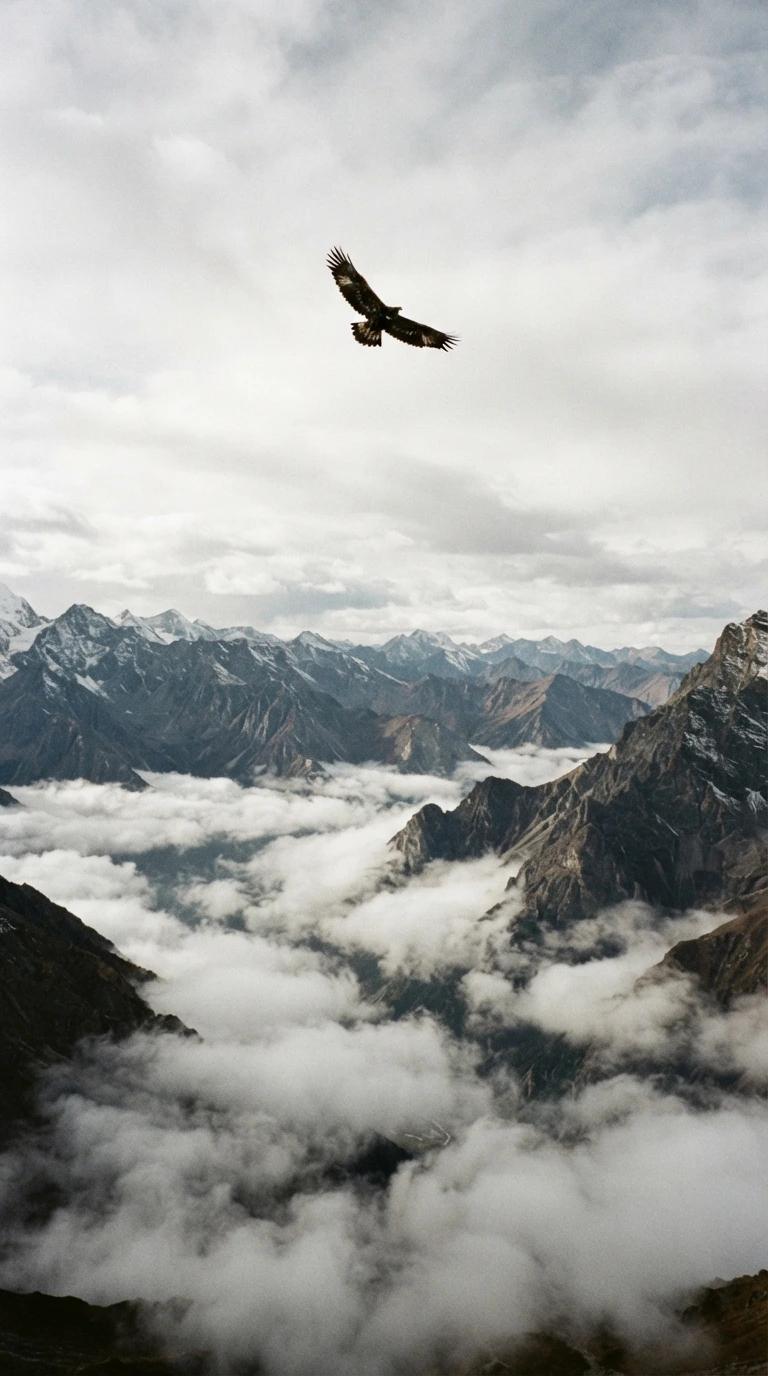
but those who wait for the LORD will renew their strength. They will mount up with wings like eagles. They will run, and not be weary. They will walk, and not faint.
Isaiah 40:31 · World English Bible, Catholic Edition (public domain)
The short answer
Isaiah 40:31 promises that people who wait for the LORD, looking to him in hope when their own strength is gone, will receive new strength from him to soar, run and walk. It answers a worn-out people who felt God had forgotten them, and it rests on the God who never tires.
- To whomThose who wait
- The giftRenewed strength
- The pictureWings like eagles
- The resultRunning, walking, not failing
Explain it at my level
Kids
Even strong, fast runners get tired and fall down. God never gets tired. When God’s people felt too tired to keep going, the prophet told them to look to God and keep expecting him to help. God would give them new strength. They would rise like big birds high in the sky, then run and walk and keep going.
Key takeawayWhen we run out of strength, God still has plenty to give.
Simple
God’s people felt forgotten, far from home and worn out. The prophet reminds them that God does not get tired, and that he gives strength to the weak. Even young people run out of energy. Those who wait for the LORD, looking to him and expecting his help, will get new strength. The verse pictures it three ways: flying like eagles, running and walking without giving out.
Key takeawayThe strength in this verse comes from God, and it is given to people who have run out.
Standard
The verse finishes a sentence that begins in verse 30. It is the last line of an answer to the complaint in verse 27: “My way is hidden from the LORD.” The prophet replies that the Creator “doesn’t faint” and “isn’t weary” (v. 28), that he gives power to the weak (v. 29), and that even the young give out (v. 30). So those who are renewed are not the naturally strong. They are the ones who wait. The Hebrew verb can mean to look for, hope and expect. Their strength comes from outside them, from the God just described, which is why the promise can reach people who have nothing left.
Key takeawayThe verse sets human exhaustion beside a God who never tires, and waiting joins the two.
Scholar
Two verbs bind the unit. God does neither in verse 28, the young do both in verse 30, and those who wait do neither here, with the pair in reverse order; the adjective behind weak in verse 29 matches one of them. The participle behind those who wait is bound to the divine name, and the same participle returns in 49:23, there with a suffix for me. The verb behind renew is a causative that STEPBible glosses as change, substitute or renew, and Job 14:7 uses it of a felled tree sprouting again, so the phrase may suggest new strength replacing spent strength. The identical phrase comes in the first line of 41:1, of the peoples summoned to judgment. The bird word also covers vultures in the lexicon. Eagle language recalls the exodus for some readers (Exodus 19:4; Deuteronomy 32:11), and 40:3 has already spoken of a highway in the wilderness, though the verse itself does not make the link.
Key takeawayThe verse reverses what verse 30 says of the young, using the words verse 28 uses of God.
Key words
In the original Hebrew word order, read right to left. Choose a word to see what it means and why it matters.
those who wait for
וְקוֹיֵ֤ vekoye
those looking to
Vekoye, joined to and, is a participle of qavah, which the lexicon gives as to wait, look for, hope, expect. Isaiah uses the same verb when the vineyard owner looks for grapes (5:2), and it can sit beside the word for hope in Hebrew poetry (Psalm 130:5). It describes people turned toward someone.
Why it mattersWaiting here is not idleness. It is the posture of people who still expect God to act.
Qal participle, masculine plural construct · Strong’s H6960
the LORD
יְהוָה֙ YHWH
the LORD
The divine name follows the participle directly, bound to it, so the Hebrew is close to those waiting of the LORD. WEBC prints the name as the LORD. It answers verse 27, where the complaint is that the speaker’s way is hidden from this same LORD.
Why it mattersThe verse is not about patience in general. Its waiting has one object, the God just described.
Proper noun · Strong’s H3068
renew
יַחֲלִ֣יפוּ yachalifu
they will renew
Yachalifu is a Hiphil of chalaf, a root meaning to pass on or change. The lexicon gives change, substitute and renew for this stem. Job 14:7 uses it of a cut tree sprouting again, and the same two Hebrew words return in the first line of Isaiah 41:1.
Why it mattersThe form may suggest fresh strength taking the place of what has run out, though the English word renew also fits.
Hiphil imperfect, 3rd person masculine plural · Strong’s H2498
strength
כֹ֔חַ khoach
strength, power
Koach covers human strength, the strength of animals and the power of God. It appears in verse 29, where God gives it to the weak, and verse 31 now shows those people receiving it. The prophet has also used the word in verse 26, of God’s own might.
Why it mattersThe same word links God’s giving in verse 29 with the renewal here, so its source is plain.
Noun, masculine singular absolute · Strong’s H3581
mount up
יַעֲל֥וּ ya’alu
they will rise
Ya’alu is the common verb for going up or ascending. It is a plain Qal form, and it also describes climbing and rising. Verse 9 uses the same verb when the herald is told to go up on a high mountain.
Why it mattersIt gives the first picture of the three its upward motion, after verse 30 ends with young men falling.
Qal imperfect, 3rd person masculine plural · Strong’s H5927
wings
אֵ֖בֶר 'ever
pinion, wing
Ever means a pinion or wing, and the lexicon notes its use for birds such as doves and eagles. It is singular in the Hebrew, though the English reads naturally as a plural.
Why it mattersThe focus is on lift and flight, an image of being carried beyond what legs can do.
Noun, masculine singular absolute · Strong’s H83
like eagles
כַּנְּשָׁרִ֑ים kanesharim
like eagles, vultures
Nesher is plural here, with like. The STEPBible lexicon gives eagle, vulture and griffon-vulture, so the word may cover more than one large soaring bird. The comparison is about rising on the wing. The verse says nothing about how these birds age or heal.
Why it mattersLater bird stories about eagles growing young again are not in this verse, and it does not depend on them.
Noun, masculine plural absolute · Strong’s H5404
run
יָר֙וּצוּ֙ yarutzu
they will run
Yarutzu is the ordinary verb for running, and a runner or messenger can be named from the same root. After the soaring image, the verse comes down to the ground and speaks of movement that a body knows and that tires it quickly.
Why it mattersThe promise moves from the sky to the road, where the exhausted people of verse 27 actually are.
Qal imperfect, 3rd person masculine plural · Strong’s H7323
not be weary
וְלֹ֣א יִיגָ֔עוּ velo’ yiga’u
will not tire
Yiga’u comes from yaga, to toil or grow weary, with the plain word for not before it. Verse 28 says God does not do this, and verse 30 says the youths do. Here it is denied of those who wait.
Why it mattersThe people who wait are given what verse 28 says of God himself, while verse 30 denies it to youth.
Negative particle; Qal imperfect, 3rd person masculine plural · Strong’s H3808 + H3021
walk
יֵלְכ֖וּ yelekhu
they will walk
Yelekhu comes from halakh, to go or walk, the Bible’s everyday verb for moving along and sometimes for a way of life. It is the slowest of the verse’s three movements, and it comes last. Some readers find the emphasis falls here, on ordinary persistence.
Why it mattersThe verse ends with walking, not with flight, and it reaches the ordinary road.
Qal imperfect, 3rd person masculine plural · Strong’s H1980
not faint
וְלֹ֥א יִיעָֽפוּ velo’ yi’afu
will not give out
Yi’afu comes from ya’af, to be or grow weary or faint. It closes the chapter. The same verb is used of God in verse 28 and of the youths in verse 30, and the two weariness verbs come here in the opposite order to verse 30.
Why it mattersThe chapter that opened with comfort ends on people who keep going when they could have given out.
Negative particle; Qal imperfect, 3rd person masculine plural · Strong’s H3808 + H3286
Where the verse sits
Isaiah 40:31 finishes a sentence begun in verse 30, and it closes the opening chapter of the part of Isaiah called the Book of Consolation. Israel has complained that God no longer sees its situation. This verse is the last line of the prophet’s reply, and many scholars place it in the Babylonian exile.
- vv. 1–11
God orders comfort for his people, a highway in the wilderness and good news for Zion, and he comes like a shepherd.
- vv. 12–26
A series of questions: who measured the waters? To whom can God be compared? Nations and idols are nothing beside the Creator.
- v. 27
The complaint is voiced: Jacob and Israel say God does not see their way or care about their cause.
- vv. 28–30
The reply: the Creator never tires, he gives power to the weak, and even the young run out.
- v. 31
You are here. Those who wait for the LORD receive new strength, and rise, run and walk without giving out.
Who wrote this, and when?
The book carries Isaiah’s name, and he prophesied in eighth-century Judah. Older tradition read the whole book as his, and in 1908 the Pontifical Biblical Commission ruled that the arguments for several authors did not compel that conclusion. Today many scholars, as the USCCB’s introduction reports, assign chapters 40–55 to an anonymous poet near the end of the Babylonian exile. Either way, the chapters address people in exile.
A complaint behind the promise
The verse makes most sense as a reply. In verse 27 the people say “My way is hidden from the LORD,” and that “the justice due me is disregarded by my God.” If the setting is exile, that is the voice of people who have watched their city fall. The promise of strength is spoken to their despair, and it does not pretend the despair is foolish.
Eagles in Israel’s memory
In Exodus 19:4 God says “I bore you on eagles’ wings,” and Deuteronomy 32:11 pictures an eagle over its young. Isaiah 40 has already spoken of a highway in the wilderness (v. 3), so some readers hear a new exodus here, though the verse does not say so. In Exodus, God carries his people. Here, those who wait do the rising themselves, with strength he gives.
Common misreadings
A common reading
Waiting on God means doing nothing.
Closer to the text
The verb can mean to look for, hope and expect, and the same verse goes on to mount up, run and walk. The waiting faces toward God and keeps moving, and it comes with action rather than replacing it.
A common reading
Eagles renew their youth, and that is the point.
Closer to the text
That story is ancient bird lore, repeated by writers such as Augustine on Psalm 103:5, and Augustine himself says “is said.” Isaiah 40:31 compares rising on the wing. Its renewal comes from God (v. 29), and it does not depend on the habits of birds.
A common reading
Real faith means never feeling tired.
Closer to the text
This verse is spoken to worn-out people, and verse 29 gives power to “the weak.” The poetry promises strength that does not run out on the road. It does not deny tiredness, which verse 30 treats as part of being human, even for the young.
Read it with these verses
- Exodus 19:4God carries Israel out of Egypt on eagles’ wings, an older use of the same bird image.
- Isaiah 49:23The same Hebrew participle returns: those who wait for God will not be disappointed.
- Psalm 27:14The same verb as a command: wait for the LORD, be strong, take courage.
- Psalm 103:5A different renewal image using the eagle, which Augustine explains with a story about the bird.
- Matthew 11:28Jesus invites the burdened to come to him for rest, the Gospel paired with this reading in Advent.
- Hebrews 12:1–3Christians run with perseverance, looking to Jesus so that they do not grow weary.
Live it this week
- Where have you, like Israel in verse 27, quietly decided that God no longer sees what is happening to you?
- Waiting here means looking to God while still walking. What one ordinary duty could you carry on with this week, while you pray?
- Are you trying to draw your strength from yourself, or are you coming back to God for it each day?
A short prayer
Lord, you do not grow tired, and I do. When I think you have stopped seeing me, teach me to look to you again, and give me strength for the next ordinary step. Amen.
To pray with this verse more slowly, try lectio divina, the Church’s ancient way of praying with Scripture.
Memorize it
Say the verse aloud, then hide more words. Tap a blank to peek.
Teaching Isaiah 40:31
For parents, small-group leaders and preachers.
With kids
Ask: What is the most tired you have ever been? What helped? Then read the verse together. Explain that everyone gets tired, even strong runners, but God does not, and he gives strength to people who look to him.
Small group questions
- Read verse 27 first. How does that complaint change the way verse 31 sounds?
- Which words does verse 31 share with verses 28 and 30? What does that show?
- Why might the verse move from flying to running to walking?
Sermon outline
- The complaint: God has lost sight of us (v. 27)
- The answer: God does not tire (v. 28)
- The gift: power for the weak (v. 29)
- The limit: even the young give out (v. 30)
- The promise: strength for those who wait (v. 31)
Questions people ask
What does it mean to wait for the LORD in Isaiah 40:31?
It means looking to God and expecting him to act, especially when your own strength has gone. The underlying Hebrew verb can mean to wait, look for, hope and expect. So it is not idle delay. The verse goes straight on to rising, running and walking, which suggests that waiting and moving belong together.
Who wrote Isaiah 40:31?
Authorship is debated, because the verse sits in a part of the book many scholars assign to a later prophet. The USCCB’s introduction says chapters 40–55 are generally attributed to an anonymous poet near the end of the Babylonian exile. Older tradition held that Isaiah of Jerusalem wrote the whole book, and in 1908 the Pontifical Biblical Commission ruled that the arguments against this were not compelling.
Who was Isaiah 40:31 written to?
It speaks to discouraged Israel, called Jacob and Israel in verse 27, who complain that God has lost sight of them. Many scholars identify them with Jews in exile in Babylon. Pope Francis describes these chapters as announcing the end of that exile. On that reading, the first hearers needed strength to believe that God could still bring them home.
Do eagles really renew their strength?
The verse does not say they do. It says that people rise with wings like eagles, comparing them to birds that soar. The idea that old eagles regain their youth comes from ancient lore connected with Psalm 103:5, which Augustine passes on as something said about the bird. The Hebrew word can also cover vultures, so it is no study of one species.
Why does the verse go from flying to running to walking?
The text does not say why, but some readers see the order as moving toward daily life. Flying is the grand image, and walking is the plain one. Ending there suggests that God’s strength reaches the slow, ordinary miles as well as the high moments. Others simply read the three as a poetic picture of unfailing strength.
How is Isaiah 40:31 different from Isaiah 41:10?
They are close in theme but say different things. Isaiah 40:31 promises renewed strength to those who wait for the LORD, in the third person. Isaiah 41:10 has God himself speaking to one addressed as you, telling that person not to fear because he will strengthen and uphold. Both belong to the same section of the book.
What does the Catholic Church say about Isaiah 40:31?
The Church reads it as a word of hope. Pope Francis took it as the theme of his message for World Youth Day 2024, calling young people to be pilgrims of hope. It closes the first reading on Wednesday of the second week of Advent. The Catechism teaches that hope “sustains him during times of abandonment” (1818), which is the complaint of verse 27.
How can I explain Isaiah 40:31 to a child?
Start with being tired. Everyone gets tired, even the fastest runner, but God never does, and he shares his strength with people who look to him. Tell the child that this is a promise for when we feel we cannot go on. Choose the Kids level above to read a version aloud.
In culture
In the 1981 film Chariots of Fire, the Scottish runner Eric Liddell, who will not race on a Sunday at the Paris Olympics, gives the reading at a church service in the city, and his words from Isaiah 40 are heard while other athletes compete. The verse’s soaring and running lines are among them. The scene is a film’s telling of events. In 2024 Pope Francis took this verse as the theme of his World Youth Day message.
Keep reading
Sources
Every verse is quoted word for word, and every Catechism paragraph below was checked on the Vatican’s published text.
Scripture
- Isaiah 40:27–31
- Exodus 19:4
- Isaiah 40:3
- Isaiah 40:9
- Isaiah 40:26
- Isaiah 41:1
- Isaiah 41:10
- Isaiah 5:2
- Isaiah 49:23
- Psalm 27:14
- Psalm 103:5
- Psalm 130:5
- Job 14:7
- Deuteronomy 32:11
- Matthew 11:28
- Hebrews 12:1–3
Other sources
- Catechism of the Catholic Church, 1818
- Francis, Message for the 39th World Youth Day, 29 August 2024
- United States Conference of Catholic Bishops, introduction to the Book of Isaiah and New American Bible notes on Isaiah 40
- Augustine, Expositions on the Psalms, Psalm 103, section 8
- Catholic Encyclopedia, “Isaias” (reporting the Pontifical Biblical Commission’s decision of 28 June 1908)
- USCCB daily readings, Wednesday of the Second Week of Advent (Lectionary 183), 11 December 2024
- Filmsite, “Chariots of Fire” (1981)
- “Paris 24 – A Hundred Years: the Story of Eric Liddell”, ap.org.au, 9 July 2024
- STEPBible.org, tagged Hebrew text and lexicon (CC BY 4.0), for the original words, Strong’s numbers and grammatical forms
Scripture is quoted word for word from the World English Bible, Catholic Edition. Images are artistic interpretations.