

Psalm 147:3 · Meaning, context & original Hebrew
What does Psalm 147:3 mean?
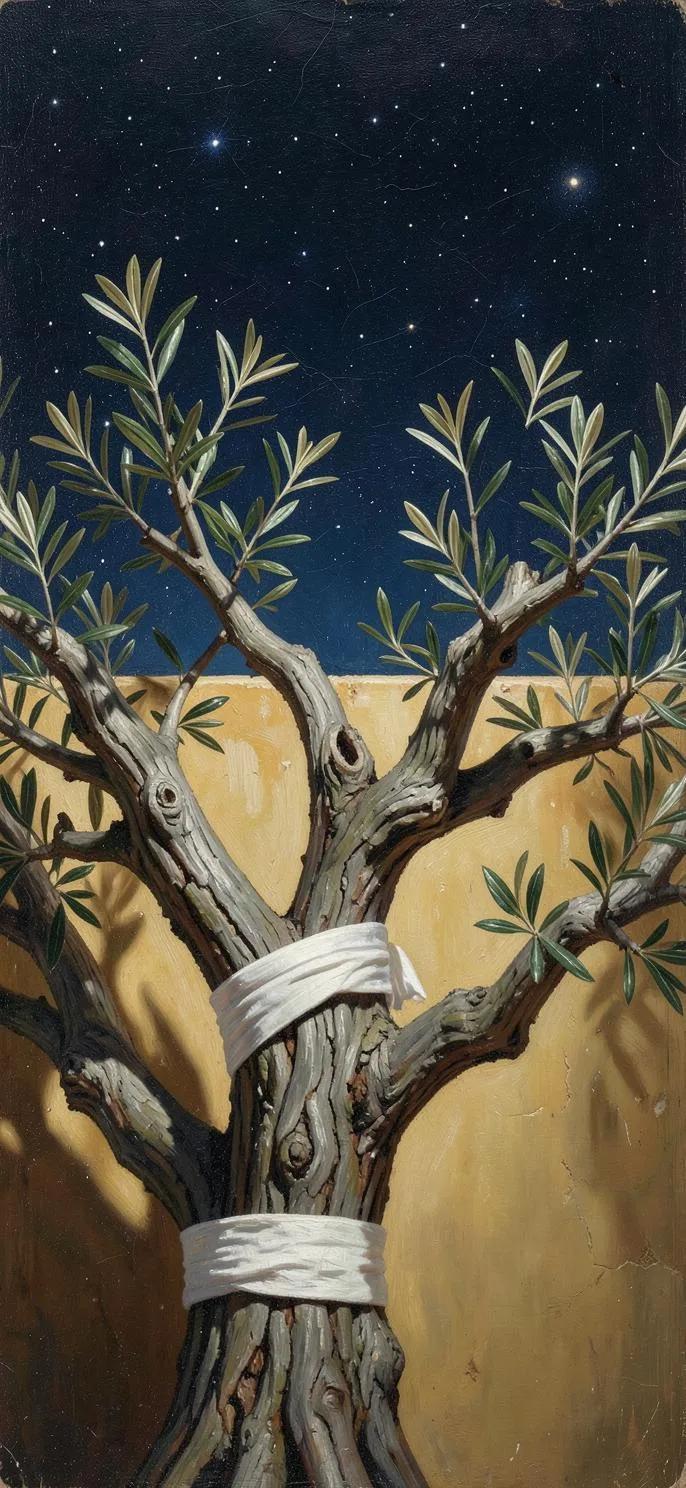 Watch this verse in the Bible Frame app
He heals the broken in heart, and binds up their wounds.
Psalm 147:3 · World English Bible, Catholic Edition (public domain)
The short answer
Psalm 147:3 says that the LORD heals people whose hearts are broken and binds up their wounds, tending each hurt the way a healer wraps an injury. In a hymn that praises God for rebuilding Jerusalem and gathering its exiles, it sets this close, gentle care beside the power that counts and names the stars.
- Who healsThe LORD
- WhomThe broken in heart
- HowHe binds up wounds
- Beside itHe counts the stars
Explain it at my level
Kids
When you fall and scrape your knee, someone who loves you cleans it and puts on a bandage. This verse says God does that for the hurts inside us too, like when we feel very sad or left out. God is so great that he knows every star by name. And he still bends down to care for each sore heart.
Key takeawayThe God who made the stars bandages sad hearts.
Simple
Psalm 147 is a song of praise. Its first verses thank God for rebuilding Jerusalem and bringing home people who had been scattered. Then it says he heals people whose hearts are broken and binds up their wounds, the way you would bandage a cut. The next verse says the same God counts the stars and names them. The psalm puts his greatness and his gentleness side by side.
Key takeawayGod is great enough to count the stars and gentle enough to bandage a heart.
Standard
The psalm opens with a call to praise, then gives reasons. Verse 2 says the LORD builds up Jerusalem and gathers the outcasts of Israel, language that fits the return from exile. Verse 3 turns from the city to its people, whose hearts are broken, perhaps by what exile cost them. The verb for binds up is the ordinary word for bandaging a wound. Verse 4 then lifts the eyes to the stars, which God counts and names, and verse 6 says he upholds the humble. Isaiah uses the same pictures: God calls the stars by name (40:26), and his messenger is sent to bind up the broken hearted (61:1).
Key takeawayRebuilt walls were not enough; the psalm praises a God who also mends the people inside them.
Scholar
Verses 2–6 run as a chain of participles naming what the LORD does: boneh, builder, in verse 2, then harofe and mechabesh here, moneh, counting, in verse 4, and two more in verse 6, with finite verbs between them. The participles present these acts as characteristic of God. The article on harofe makes it almost a title, as in Psalm 103:3. Broken is a Qal passive participle, while Psalm 34:18 and Isaiah 61:1 use the Niphal, and Isaiah 61:1 pairs it with the same verb chavash. Its Piel is rare, found elsewhere in STEPBible’s text only at Job 28:11. Atzevet can mean a wound or a sorrow. The Greek and Latin Bibles divide the psalm after verse 11. Most scholars date it after the exile; some commentators tie verses 2 and 13 to Nehemiah’s walls, which is debated.
Key takeawayA chain of participles makes healing as much a part of God’s character as building and counting stars.
Key words
In the original Hebrew word order, read right to left. Choose a word to see what it means and why it matters.
He heals
הָ֭רֹפֵא harofe’
the one healing
Harofe joins the article to a participle of rafa, to heal, so it reads almost like a title: the one who heals. Psalm 103:3 uses exactly this form for the God who heals all your diseases, and Exodus 15:26 speaks of the LORD who heals you. STEPBible’s lexicon lists healing of individual distress among the verb’s figurative uses.
Why it mattersThe participle can describe what God characteristically does, a settled trait of his, more than one act in the past.
Qal participle, masculine singular absolute · Strong’s H7495
the broken
לִשְׁב֣וּרֵי lishvurei
broken ones of
Shevurei is a passive participle of shavar, to break, a verb used of bones and pottery and, figuratively, of people crushed in spirit. It is plural and carries the preposition le, to. Psalm 34:18 and Isaiah 61:1 use another form of the same verb in the same phrase, broken of heart.
Why it mattersThese are people something has happened to. The verse does not blame them for being broken, and it speaks of many at once.
Qal passive participle, masculine plural construct · Strong’s H7665
heart
לֵ֑ב lev
heart, inner self
Lev is the inner person. STEPBible’s lexicon lists mind, will, memory, conscience and courage, as well as the seat of the emotions. So a broken heart can mean grief, and also a will that has given up or courage that has failed. Isaiah 61:1 uses this same pairing of broken and heart.
Why it mattersHebrew hearts think and choose as well as feel, so the healing promised here reaches the whole inner life, not only the emotions.
Noun, masculine singular absolute · Strong’s H3820
binds up
וּ֝מְחַבֵּ֗שׁ umechabesh
binding up
Mechabesh is a participle of chavash, to bind or bandage, here in the Piel; in STEPBible’s tagged text that stem of the verb appears elsewhere only in Job 28:11. Chavash is the word for wrapping a wound in Hosea 6:1, Ezekiel 34:16 and Isaiah 61:1, and also for saddling a donkey.
Why it mattersGod is pictured close up, doing the patient work of a nurse or a shepherd with his hands, not giving orders from far away.
Piel participle, masculine singular absolute · Strong’s H2280
their wounds
לְעַצְּבוֹתָֽם le’atzevotam
their hurts
Atzevotam is the plural of atzevet with the suffix their. STEPBible’s lexicon gives pain, hurt, injury, sorrow and wound. The word means sorrows in Psalm 16:4 and Job 9:28, and Proverbs 15:13 joins it to heart for an aching heart. So these wounds can be inner griefs as much as bodily injuries.
Why it mattersThe verse does not limit God’s care to injuries others can see. The word reaches inward, to sorrow that no one else may notice.
Noun, feminine plural construct, with 3rd person plural suffix · Strong’s H6094
Where the verse sits
Psalm 147 is one of the five hymns that close the Book of Psalms, each beginning and ending with Praise the LORD. Verse 3 belongs to its first section. It follows the rebuilding of Jerusalem and the gathering of Israel’s outcasts in verse 2, and comes just before the LORD counts the stars.
- vv. 1–2
A call to praise, because the LORD builds up Jerusalem and gathers the outcasts of Israel.
- vv. 3–6
You are here. He heals the broken in heart, counts and names the stars, and upholds the humble while bringing the wicked down.
- vv. 7–11
A second call to sing: God sends rain, feeds the animals and young ravens, and delights in those who hope in his loving kindness.
- vv. 12–14
Jerusalem is called to praise, for God has strengthened its gates, blessed its children and given peace and the finest wheat.
- vv. 15–20
God’s word runs through the earth in snow, frost and thaw, and he has given his statutes and ordinances to Israel.
A city rebuilt, a people gathered
Verse 2 speaks of the LORD building up Jerusalem and gathering the outcasts of Israel, and verse 13 of strengthened gates. John Paul II read this as Jerusalem restored after the Babylonian exile. Some commentators link the psalm to Nehemiah’s walls, though that is debated. Verse 3 turns from stones to people: a city could be rebuilt, but hearts needed healing too.
One psalm or two?
Hebrew Bibles keep all twenty verses as Psalm 147. The Greek and Latin Bibles divide it after verse 11 into two psalms, 146 and 147, so this verse is Psalm 146:3 in older Catholic books and some liturgical texts. The Greek also heads both parts with the names of Haggai and Zechariah, prophets of the return. The Hebrew has no heading.
Stars and wounds
Verse 4 says the LORD counts the stars and calls each by name, and verse 5 that his understanding is infinite. Set beside verse 3, the effect is a contrast: the same God governs the heavens and bandages a hurt. Isaiah 40:26 also has God calling the stars by name, in a chapter that opens with comfort for his people.
Read Psalm 147, the whole chapter, word for word.
Common misreadings
A common reading
This verse is about getting over a romantic breakup.
Closer to the text
It can comfort anyone whose heart is broken, but in Hebrew the heart is the whole inner self, and verse 2 sets the verse among exiles coming home. The psalm has a people in view, healed after national loss, before it speaks to private sorrow.
A common reading
If I pray, God will take the pain away at once.
Closer to the text
The picture is a wound being bandaged, which protects and allows healing over time. The participles describe God’s ongoing work. The verse promises that he heals and binds up, without saying how quickly the healing will come.
A common reading
A God who counts the stars is too great for my hurts.
Closer to the text
The psalm argues the opposite. It puts the healing of broken hearts immediately before the counting of the stars, so the God who knows every star is the one bending over each wound. His greatness is the ground of his care.
How traditions read it
Jews and Christians both praise God in this psalm as the healer of broken hearts; they differ in where they pray it and in how they see that healing given.
Jewish
Psalm 147 is recited every morning in Pesukei dezimra, the psalms of praise before the main prayers, a practice traced to a wish in the Talmud (Shabbat 118b) to complete the praise daily. The medieval commentator Radak reads the broken in heart as Israel, grieving in exile.
Catholic
Augustine taught that the broken in heart are the humble, and that God’s bandages are the sacraments of this life, taken off only when healing is complete. The Catechism calls Christ the physician of our souls and bodies (1421), and verse 3 gives a Sunday refrain in Year B.
Read it with these verses
- Psalm 147:4The next verse sets God’s healing beside his counting and naming of every star.
- Isaiah 61:1The anointed messenger is sent to bind up the broken hearted, with the same Hebrew verb.
- Psalm 34:18The LORD is near the broken in heart, and in Psalm 147 he goes on to heal them.
- Hosea 6:1Israel trusts that the LORD who has injured them will heal them and bind up their wounds.
- Luke 4:18At Nazareth Jesus reads from Isaiah 61 and says that it is fulfilled in him.
- Luke 10:34The Samaritan binds up a stranger’s wounds, showing in action the care this verse gives to God.
Live it this week
- What hurt are you carrying that you have not yet let God tend, perhaps because it feels too small or too deep?
- The verse pictures God binding wounds. Whose hurt could you help to bind up this week, with time, a visit or a meal?
- Healing that binds up often takes time. How will you keep bringing the same wound to God in prayer?
A short prayer
Lord, you count the stars and know each one by name, and you know my wounds as well. I bring you the places where my heart is broken. Bind them up gently, and heal me in your own time. Amen.
To pray with this verse more slowly, try lectio divina, the Church’s ancient way of praying with Scripture.
Memorize it
Say the verse aloud, then hide more words. Tap a blank to peek.
Teaching Psalm 147:3
For parents, small-group leaders and preachers.
With kids
Bring a bandage and ask: What do we do when someone gets a cut? Talk about cleaning it and wrapping it up. Then read the Kids level above together, and ask what kind of hurts God might bandage inside us.
Small group questions
- Read verses 2 and 3 together. How might rebuilding Jerusalem and healing broken hearts be connected?
- Why do you think the psalm puts counting the stars right after binding up wounds?
- Compare Isaiah 61:1. What does the shared phrase about the broken hearted add to this verse?
Sermon outline
- The God who rebuilds (v. 2)
- The God who heals (v. 3a)
- The God who binds up (v. 3b)
- The God who names the stars (v. 4)
Questions people ask
What does Psalm 147:3 mean?
It means that God heals people whose inner lives have been broken, and that he does it with care, like someone bandaging a wound. In the psalm the broken are first the people of Jerusalem after exile, but the promise is open to anyone in grief. The next verse adds that this same God counts the stars, so his care comes with his full power.
Who wrote Psalm 147?
No one knows. The Hebrew psalm has no heading. The Greek Bible heads it with the names of Haggai and Zechariah, prophets of the return from exile, but that title is not in the Hebrew. Most scholars date the psalm after the exile because of its rebuilt Jerusalem and gathered outcasts, and some commentators link it to Nehemiah’s walls, which is debated.
What does “broken in heart” mean in the Bible?
It means a person whose inner self has given way, more than someone who is only sad. In Hebrew the heart covers mind, will, conscience and courage as well as feeling. The word for broken is used of shattered bones and pottery. So the phrase can describe grief, despair, shame or a will that has given up.
Why does Psalm 147:3 sit next to a verse about the stars?
Because the psalm wants the two to be read together. Verse 3 shows God bending down to bandage wounds, and verse 4 shows him counting the stars and naming each one. The effect is that God’s care is not small and his greatness is not cold. Isaiah 40:26 uses the same picture of God naming the stars to comfort his people.
When is Psalm 147 read at Mass?
It is the responsorial psalm on the Fifth Sunday in Ordinary Time in Year B, after Job’s complaint in Job 7 and before Mark 1:29–39, where Jesus heals many. Its refrain, “Praise the Lord, who heals the brokenhearted,” comes from verse 3. Pope Francis quoted the verse in 2018 when he called a day of prayer and fasting for peace.
How is Psalm 147:3 different from Psalm 34:18?
Psalm 34:18 says the LORD is near the broken hearted and saves the crushed in spirit, while Psalm 147:3 says he heals them and binds up their wounds. One stresses God’s presence in the trouble, the other his work of repair. Psalm 34 is a thanksgiving that turns to teaching, and Psalm 147 is a hymn of praise for a restored people.
How can I explain Psalm 147:3 to a child?
Use a bandage. Ask what happens when someone gets a cut, and explain that hearts can get hurt too, when we are sad or left out. Tell the child that God cares for those hurts like a gentle nurse, and that he also knows every star by name. Choose the Kids level above to read a version aloud.
Keep reading
Sources
Every verse is quoted word for word, and every Catechism paragraph below was checked on the Vatican’s published text.
Scripture
- Psalm 147:1–20
- Exodus 15:26
- Job 7:1–7
- Job 9:28
- Job 28:11
- Psalm 16:4
- Psalm 34:18
- Psalm 103:3
- Proverbs 15:13
- Isaiah 40:26
- Isaiah 61:1
- Ezekiel 34:16
- Hosea 6:1
- Mark 1:29–39
- Luke 4:18
- Luke 10:34
- Psalm 147:4
Other sources
- Augustine, Exposition on Psalm 147 (146 in Latin numbering), 5–8 (New Advent)
- John Paul II, General Audience on Psalm 147:1–11, 23 July 2003
- Francis, Angelus, 4 February 2018
- Catechism of the Catholic Church, 1421
- Lectionary for Mass, Fifth Sunday in Ordinary Time, Year B
- Radak on Psalms 147:3 (Sefaria, Hebrew text)
- Eliezer Melamed, Peninei Halakha, Prayer 14:2, “What Are Pesukei d’Zimrah?”, citing Babylonian Talmud Shabbat 118b
- Cambridge Bible for Schools and Colleges, Psalms, notes on Psalm 147 (read at biblehub.com)
- Keil and Delitzsch, Commentary on the Old Testament, Psalm 147
- Wikipedia, “Psalm 147” (Greek and Latin division and Jewish liturgical use only)
- STEPBible.org, tagged Hebrew text and lexicon (CC BY 4.0), for the original words, Strong’s numbers and grammatical forms
Scripture is quoted word for word from the World English Bible, Catholic Edition. Images are artistic interpretations.